Just In

Friday, 11 November 2011

Western Economic Racism

What happens when there is a boom in India? The West cashes in. As India prospers and their construction industry grows, a deadly demand for asbestos is on the increase. One of the suppliers for this product is Canada where chrysotile asbestos is banned. So how does the Canadian Government justify its export? Simple it is not banned in India.

Chrysotile(asbestos) open-pit mine, Thetford Mines, Quebec 


India thinks the World Health Organisation is wrong. WHO state, "Exposure to asbestos causes a wide range of diseases, such as lung cancer, mesothelioma, and asbestosis..." to name a few. In Australia the dangers of asbestos are well known with home renovators now being reminded of its fatal consequences.

WHO Asbestos


Economics is the real reason this trade, which has been going on for sometime, is still occurring. Asbestos is a cheap building material, easy to use and thanks to Canada readily available. Of course this is all morally wrong and there is a history of the West taking advantage of a developing India.

The Indian Bhopal Disaster in 1984, at a pesticide plant in which over 3800 people were killed, is a perfect example of Western double standards. The Hazardous Installations Directorate. Health and Safety Executive; 2004. Accident Summary, Union Carbide India Ltd., Bhopal, India: December 3, 1984 states, "The events in Bhopal revealed that expanding industrialization in developing countries without concurrent evolution in safety regulations could have catastrophic consequences." And yet 27 years later the citizens of India are firmly on their way to another one of these catastrophes. 


The Bhopal disaster and its aftermath: a review


Online sites such as http://www.canadianasbestosexports.ca/Home and http://banasbestosindia.blogspot.com/2011/04/group-protests-asbestos-industry.html are drawing attention to the issue. In Australia the public and government might say this is a Canada/India issue but what it really is is a form of economic racism where Western societies place the worth of their lives above others.

Wednesday, 2 November 2011

@MolksTVTalk

Steve Molk is a blogger, podcaster, tweeter and the man behind MolksTVTalk who also dabbles in radio, 612ABC, and magazines as a columnist for Encore. This year his blog site, MolksTVTalk, was nominated as a finalist in the Sydney Writers' Competition, Best Australian Blogs.

A passion for television, a Twitter Account and a background in IT led to the establishment of a blog that has now progressed to radio appearances and he hopes a career in the media. Twitter is somewhat of an obsession for Steve, a place to engage with his followers and express his opinions while his radio podcasts allow for analysis, but still have that Breakfast Radio controversy.

612ABC TV talk with Steve

So why has he been so successful? The MolksTVTalk is all about entertainment, the fluff, as Steve calls it. His secret is the demographics, he knows who he's after and how to get them in with his link bait. His IT background no doubt helps too as the many coding in journalism websites and tips attest.

molkstvtalk.com
But wait there's more. In his spare time he also tweets via MolksPolitica to express his political views. Funnily enough this is mainly to overcome the twitter limit and when Q & A is on it's easy to see this is true.

And in his spare time... well Steve has another Twitter Account... I wonder?

Sunday, 30 October 2011

A "David and Goliath" Refuge Nature Battle

When is a Nature Refuge not a Nature Refuge? When it is called 'Bimblebox' and Clive Palmer wants it! All was revealed at a recent presentation at the University of Queensland on Friday.

'Bimblebox' is located in the new 'mega' mine area of the Galilee Basin and in 2003 a Nature Refuge Agreement covering this porperty was signed with the Queensland Government. This agreement allowed for  a model to be set up for the co-existence of cattle grazing and nature preservation, innovative management to be developed to sustain the biodiversity of the area and research projects with organisations such as CSIRO, Queensland Herbariam and Land and Water Australia to be undertaken.

As for the Nature Refuge status of permanent conservation to the area, this only restricts the landowners clearing issues, but should a mining company such as Palmer's "Waratah Coal" or Hancock's "Alpha Coal Mine" decide to undertake exploration, clearing is not an issue. Already there are 20 exploration holes on 'Bimblebox' which have caused damage including the seeding of Buffel Grass that had previously been weeded out. Of course this damage is nothing in comparison to what will happen should the "Waratah" mine go ahead with 52% of the land being subjected to open cut mining with the other 48% mined underground.

Bimblebox today and potentially tomorrow (Care2.com)
Paola Cassino, one of the owners of 'Bimblebox', said she was expecting to be offered plenty of money, which the owners would refuse. "Waratah" have previously indicated that they may propose a land offset, but Paola sees this as, "a joke," as it took the family over 10 years just to restore undergrowth to the present property. Therefore there is no comparable land available to off set nor the short-term ability to rehabilitate other land.

There is also Native Title over the area and "Waratah Coal" are negotiating with the Wangan and Jagalingou people, however Adrian Burragubba said, "The mining company shows no respect," and the recommendation will be to reject any overtures made by them. They want to preserve the area for future generations as it is, "part of our stories and dreaming and we need to protect them."

Another interested party in 'Bimblebox's' preservation is Russell Fairfax a researcher from Queensland Herbarium who is collating information on  the fauna of the area as well as studying the implications of fire and grazing on the areas biodiversity. He sees the area as unique and a true representation of  Desert Uplands.

How things have changed from 2007 when the then Minister for Environment and Multiculturalism, Lindy Nelson-Carr wrote, "May I offer my congratulations to the many landholders and staff who have played a part in helping to reach this significant milestone—more than half a million hectares of Queensland’s diverse natural and cultural heritage is now protected under the Nature Refuge Program." Now in 2011 it is a bird and not the Queensland Government that may offer the protection.

The Black Throated Finch, Southern (Poephila cincta cincta), an endangered species has both been sighted and recorded on the refuge, which places pressure on Tony Burke MP, Minister for Sustainability, Environment, Water, Population and Communities to intervene. His responsibility is to ensure that there are no environmental adverse affects on this bird population.


Black Throated Finch (Southern) recording


Alternatively for opponents there is the submission route with these due for lodgement by the 7 November.


Submission

Thursday, 27 October 2011

SOMETHING ABOUT GUYATT PARK

Today I went for an early morning stroll and found myself walking through Guyatt Park, and as per usual thought, "Why do I never feel comfortable here?"

Guyatt Park looking shabby
Back in early September I contacted the Brisbane City Council through their Fix-o-gram lamenting its state and that it seemed to lack a user-friendly feel to it. This was in response to a council report on parks being restored to their former glory. I was reliably in formed that work would be undertaken shortly to restore the park, but that there were no plans for improvements. True to their word this is happening.

The present works to correct drainage and level the area
Speaking with Cr Julian Simmonds, the councillor for the Walter Taylor Ward, which encompasses St Lucia, who is also a member of the Environment, Parks & Sustainability Committee as well as the Neighbourhood Planning & Development Assessment Committee, advised that funding is only available for the work being presently undertaken. Poor drainage has been an ongoing problem in the park and has been exasperated by the floods hence the filling and levelling of the site. Cr Simmonds acknowledged that the site has evolved on an ad hoc basis, but he blamed this on these drainage problems with sinkholes and depressions restricting placement of playgrounds, barbecues etc.

But what of the future? Cr Simmonds said, "... there is no master plan in place," in relation to the future of the park. However, now that the underlying problems are being addressed he advised that there is potential to make these plans and that any specific suggestions or feedback would be valued. Funding these is an issue though. On a positive note, the council will be making WiFi available to this park shortly which will add some user-friendly appeal.

By undertaking the survey below, information can be forwarded to Cr Simmonds in an effort to make changes to Guyatt Park for it to become a well utilised, community friendly place that all residents and visitors can be proud of.

Guyatt Park Survey

Wednesday, 26 October 2011

MORE SCOPE FOR BETTER CLIMATE POLICY

The Galilee Basin in Queensland's Central West is the site for the new mega mine phenomenon, which calls into question the Climate Policy of both of the major political parties.

The concept of mega mines is due to lower quality thermal coal in this area that has infrastructure costs up to 100 times more than other coal sites, hence the huge areas to be mined and the huge cost to the environment. To get a feel for this, the Wandoan Coal Mine, a mega mine, covers an area of 32000 hectares, comprising 14 pits and producing 30 million tonnes of coal each year. That is 320 square kilometres and 49 mega tonnes of carbon dioxide annually from one mine alone.
Wandoan Sample Pit
Both the government and opposition climate policies have an aim of 5% reduction by 2020. The Labour Party plan to achieve this through the carbon tax and switch to renewable energy sources whilst the Liberal Party state that they will aim for a reduction in carbon emissions of 140 mega tonnes by this date. With the growth in mega mines it is hard to see how this can be achieved.

And all of this is based on the countries Scope 1 & 2 emissions, the direct and indirect 2% discharges, but does not take into account Australia's Scope 3 emissions, the indirect upstream/downstream 98% discharges, e.g. burning coal. Even major mining companies such as Xstrata are going beyond best practice and including these Scope 3 figures in their EIA's, Environmental Impact Assessments to match other global companies.

Should Australia take these into consideration? As Dr Chris McGrath, Senior Lecturer (Environmental Regulation) at the University of Queensland, said today at a Seminar on Environmental Impact Statements, "Coal is only mined to be burnt." So as a country we are on selling not just the physical product but the emissions that go with it. Australia accepts responsibility for uranium and its end usage and coal is no different.


When Scope 3 emissions are taken into account, our countries climate policy looks dismal and so is the prospect of keeping our carbon budget under the 2 degree Celsius increase. The graphs and Dr Malte Meinshausen's, from the University of Melbourne, explanation below tells the story;
"Two possible futures. One in which no climate policies are implemented (red), and one with strong action to mitigate emissions (blue). Shown are fossil CO2 emissions (top panel) and corresponding global warming (bottom panel). The shown mitigation pathway limits fossil and land-use related CO2 emissions to 1000 billion tonnes CO2 over the first half of the 21st century with near-zero net emissions thereafter. Greenhouse gas emissions of this pathway in year 2050 are ~70% below 1990 levels. Without climate policies, global warming will cross 2°C by the middle of the century. Strong mitigation actions according to the blue route would limit the risk of exceeding 2°C to 25%" M. Meinshausen et al. (2009)

The climate policy decisions that are made now and the unbridled increase in coal mining have immense repercussion for the unforeseen generations and in Dr McGrath's words on climate change, "... all of humanities futures will be affected now." 


ANNOTATED BIBLIOGRAPHY

Weaver, D. H. (2007), Thoughts on Agenda Setting, Framing, and Priming. Journal of Communication, 57: 142–147. doi: 10.1111/j.1460-2466.2006.00333.x

David H Weaver is a Research Professor and Distinguished Professor at the School of Journalism Bloomington, USA who has written many journalistic books, received journalism awards and undertaken specific research on media agenda setting since 1972. The article discusses the interconnectedness of agenda setting, framing and priming. First level agenda setting is the importance of the issue and second level agenda setting is the attributes of the issue. Weaver views framing as related to second level agenda setting in that it selects the attributes that are salient to the issue providing stated or implied arguments whilst priming is linked to agenda setting by making these issues more salient through the ability to more readily access it to form opinions. Priming, he reveals, has a strong link to television agenda setting. In conclusion the similarities between second level agenda setting and framing are the ways in which the audience think about the issue and how they are depicted with agenda setting and priming, in Weaver’s opinion, following a similar cognitive process. He states, “To sum up, there are similarities and connections between agenda setting, priming, and framing, but they are not identical processes.” His significant use of citations lends considerable expertise and credibility to the article even though some refer to his own research.

Hall, A. (2011, October 4). Watchdog investigates ‘political’ football commentary. ABC – PM.  Retrieved from: http://www.abc.net.au/pm/content/2011/s3332157.htm

This radio report was filed by Ashley Hall, a reporter of long standing, producer and occasional presenter for the radio programs AM, World Today and this program, PM. It covers the initial pokies commentary during the NRL Grand Final and the contentious issue of who initiated the remarks. The authoritative introduction and tone by Mark Colvin the presenter and veteran journalist from television news programs such as Four Corners, Foreign Correspondent and Lateline give weight to the piece. Hall provides direct quotes and circumstances of the comments and further elaboration of explanations on the framing of those comments. He uses Warren’s, one of the announcers whose initial remarks started the controversy, later comments to point out how it reinforced the Nine’s agenda setting of opposing the government’s proposal and supporting the clubs and pokie industry, which clearly demonstrates the link between the two. Later Hall firmly states his opinion disputing channel Nine priming the changes as a tax to suit their own agenda setting, thus tying in with Weavers interrelatedness of the three theories. There is extensive use of personal interviews, voice overs, related material and an expert to gain the audiences belief that this is a trustworthy investigative report.

Holmes, J. (2011, October 10). Nine investigated for on-air comments. ABC – Media Watch. Retrieved from: http://www.abc.net.au/mediawatch/transcripts/s3336406.htm

Jonathon Holmes, the presenter, has a vast  array of experience in the media, starting his career in Britain, with positions ranging from Executive Producer to Head of ABC Documentaries and joining the much respected ‘Media Watch’ in 2007. The credibility of this investigation lies with both Holmes and the programs reputation. Throughout this section of the program Holmes continually uses questions as a means to introduce evidence of wrong doings, which is interspersed with excerpts of interviews and replies to letters. By this means he shows the use of framing, provided in a live clip, to show that the comments were delivered as an expression of personal beliefs. He then states that it is incorrect to prime the audience that the pre-commitment policy is a tax. By the use of interview excerpts Holmes makes a link between the framing and priming to the networks pro-pokies agenda setting, which once again supports Weaver’s position. The story ends with a statement indicating that Nine was agenda setting on a political matter. The report is not as deeply investigative as the previous, but is more weighted to a subjective piece of journalism.

Saulwark, J. (2011, October 18) Nine admits it was responsible for pokies comments. The Sydney Morning Herald. Retrieved from: http://www.smh.com.au/entertainment/tv-and-radio/nine-admits-it-was-responsible-for-pokies-comments-20111017-1ltf7.html

The author of this article is better known as an economics reporter with the Sydney Morning Herald who usually writes in the business section. The use of Saulwick could perhaps be to avoid claims of bias as Phil Gould, one of the subjects of the article, is also a Fairfax columnist. This article is a news breaker, written objectively, but lacking any new or extensive investigation whilst clearly conveying the news at the outset that the Nine Network were stating their own position and agenda setting, not the personal commentary it was previously framed as, when on-air comments were made during the NRL preliminary final. Saulwick provides a history of the issue as well as the circumstances leading to this revelation including the misconception of the proposed pre-commitment policy being primed as a tax. By providing a legal explanation of licensing requirements Saulwark continues to deliver the report in an official narrative style. The information provided still supports Weaver’s argument that framing and priming are linked to agenda setting. This is demonstrated in that Nine admits that it was not just banter or personal expressions, framing, but was linked to their own agenda setting of an anti-government, pro-club stance, and their continued use of “tax” in reference to the policy, priming. In comparison to the two previous articles it deals only in facts and is objective.

Monday, 17 October 2011

PAGE ONE: Inside the New York Times & JOUR 1111

Through the characters of David Carr, journalist and former drug addict, Tim Arango, war correspondent, Brian Stelter, journalist and former blogger and Bruce Headlam, Media Desk Editor the story of the struggles of journalism in this technological age are told in Page One: Inside the New York Times. Whilst through their own and other historical articles the changing face of the media unfolds and the reason why the students of JOUR 1111 attended today becomes clear.


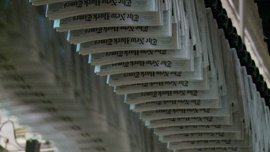
It begins immediately to gel as the Mass Media images showing the time consuming path of a newspaper from print to delivery and the "Obituary Column - Death Notices of Daily Papers" tolls the collapse of Web 1.0. As sales drop, advertising revenue decreases, as specialised advertising sites are set up, and competition by way of the internet increases the New York Times witnesses the emergence of Web 2.0. 

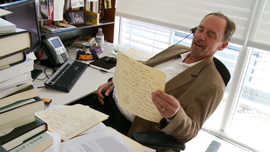
A scene from PAGE ONE: INSIDE THE NEW YORK TIMES, a Magnolia Pictures release. Photo courtesy of Magnolia Pictures.
David Carr, whose commentary and one liners steals the show, reveals the journalists attitude towards the "Social Web" when discussing the hypothetical demise of the NY Times he says, "...toss that out and kick back and see what facebook turns up." There is also the feel that citizen journalists lack the expertise to do more than re-purpose news rather than find original stories and be the news gatherers. There is of course acknowledgement of the advantages of the Digital Age through Brian Stelter, the robot, with his love of twitter and Carr's conversion, the role of Wikileaks, source or publisher, and discussion of it as a two edged sword.


The NY Times is portrayed as Agenda Setting as it initiates many Hard News stories and as a pillar of Public Trust that "proved existence of the World" by its mere production. This forms the reason behind the collective denial in the industry that traditional media outlets aren't failing. This public trust and agenda setting is clearly bought into question with the NBC's media story of the withdrawal of troops from Iraq with its 'Made for TV Moment' and lack of official facts. Even the NY Times itself does not escape criticism with Judy Miller's piece on "Weapons of Mass Destruction", which lacked the elements of critical and thorough journalism.

The economics of this failure is shown however, with the NY Times revealing it had looked into alternative funding methods ranging from philanthropic to membership, the problems with the public perception of entitlement due the continuing free news sources on the internet and finally their switch to subscription. Journalists do not come out of this unscathed with layoffs and cost-cutting which leaves journalism as an insecure, vunerable occupation with constraints on the ability to provide quality investigative journalism.

As to the future, having said all of this, the last word must go to David Carr, the star, who gives hope and describes the journalist that are left as, "tenacious motherf...ers." 

David Carr in PAGE ONE: INSIDE THE NEW YORK TIMES, a Magnolia Pictures release. Photo courtesy of Magnolia Pictures.